Inside the work
What Is Inside a uPVC Window? VEKA Profiles, Steel and Welded Corners
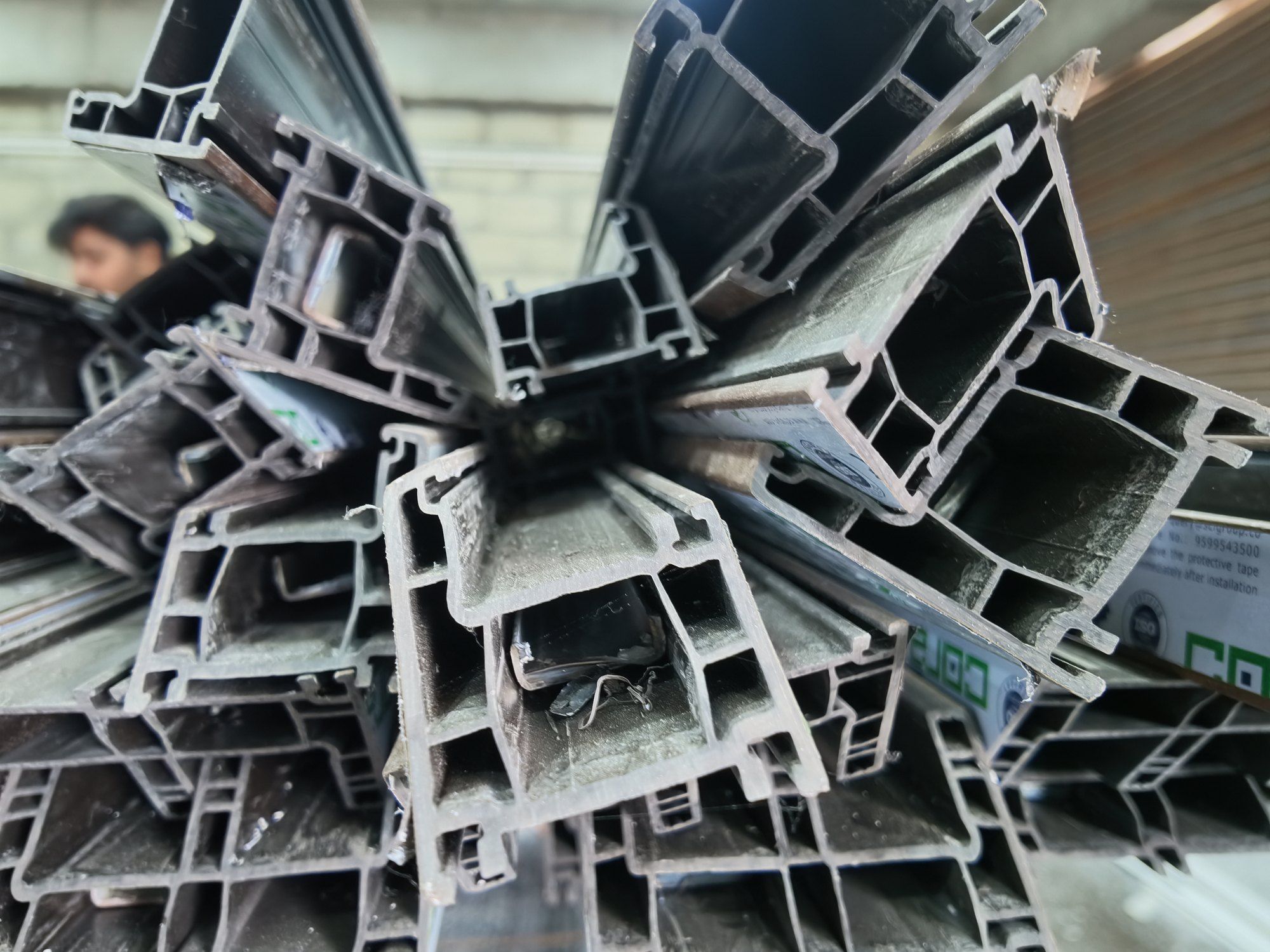
In short
A uPVC window is built from hollow multi-chamber profiles. In a quality system, galvanised steel runs inside to keep the frame straight; the corners are fused on a welding machine; drainage and hardware slots are routed; then gaskets, glass and hardware are fitted and the unit is checked before it leaves the plant.
From the outside a uPVC window looks simple: white frame, glass, handle. The parts that decide how it performs are the ones you never see. Here is what happens in our plant.
1. The profile
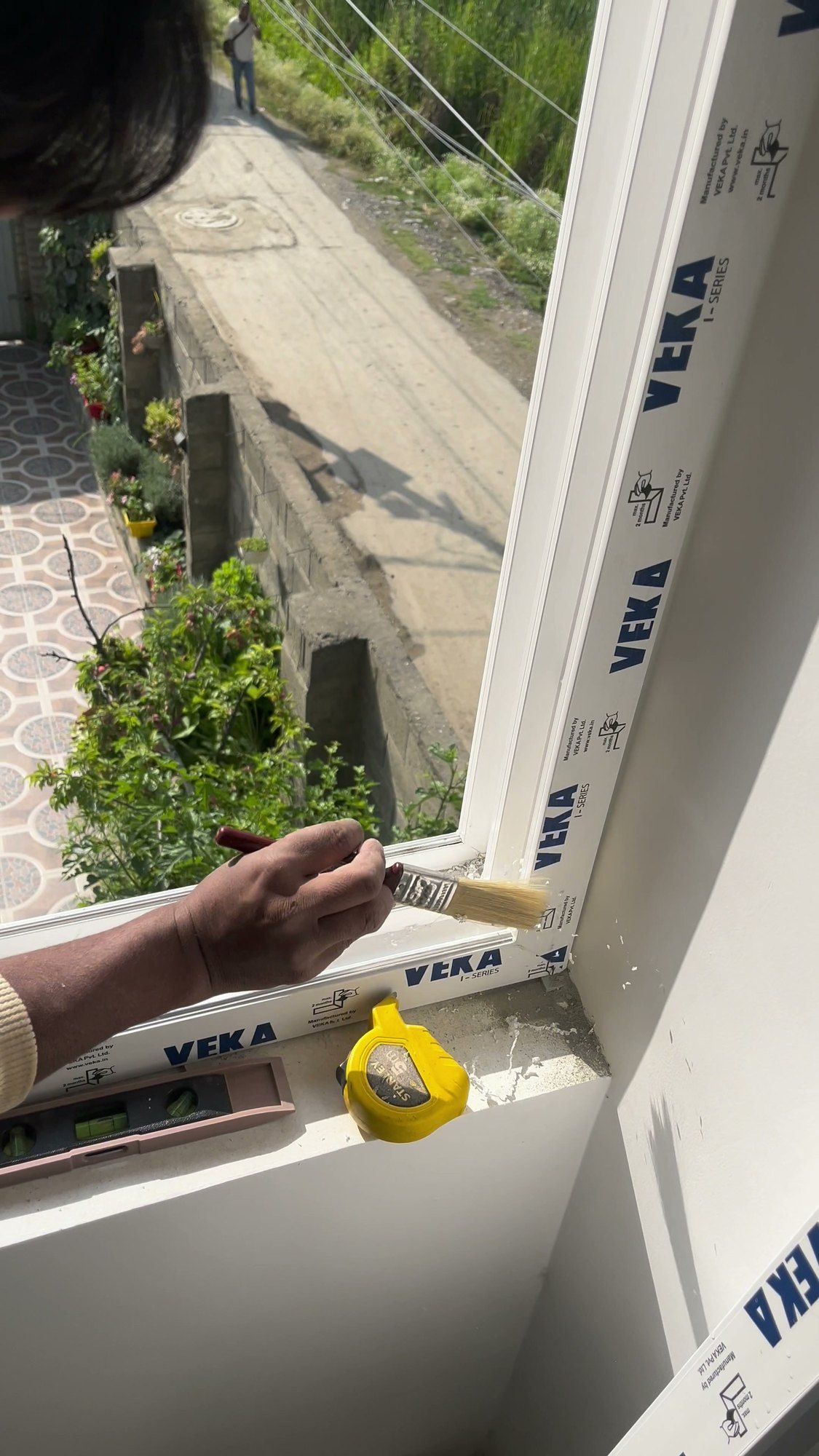
Everything starts with the profile: long lengths of extruded uPVC with several hollow chambers inside. The chambers make the frame stiff and slow down heat moving through it. We fabricate mainly on VEKA profile systems. Casement frames are typically 60 mm deep, and sliding systems vary with the number of tracks.
2. Cut to your sizes
Each length is cut on a saw at exact angles to the sizes from the site survey. Most window frames are cut at 45 degrees so the corners can be welded.
3. Steel inside
Galvanised steel reinforcement is cut and fixed inside the main chamber of the frame and sash. You never see it. Its job is to keep long frames straight and stiff, so the sash keeps closing evenly onto the gaskets winter after winter.
4. Routing
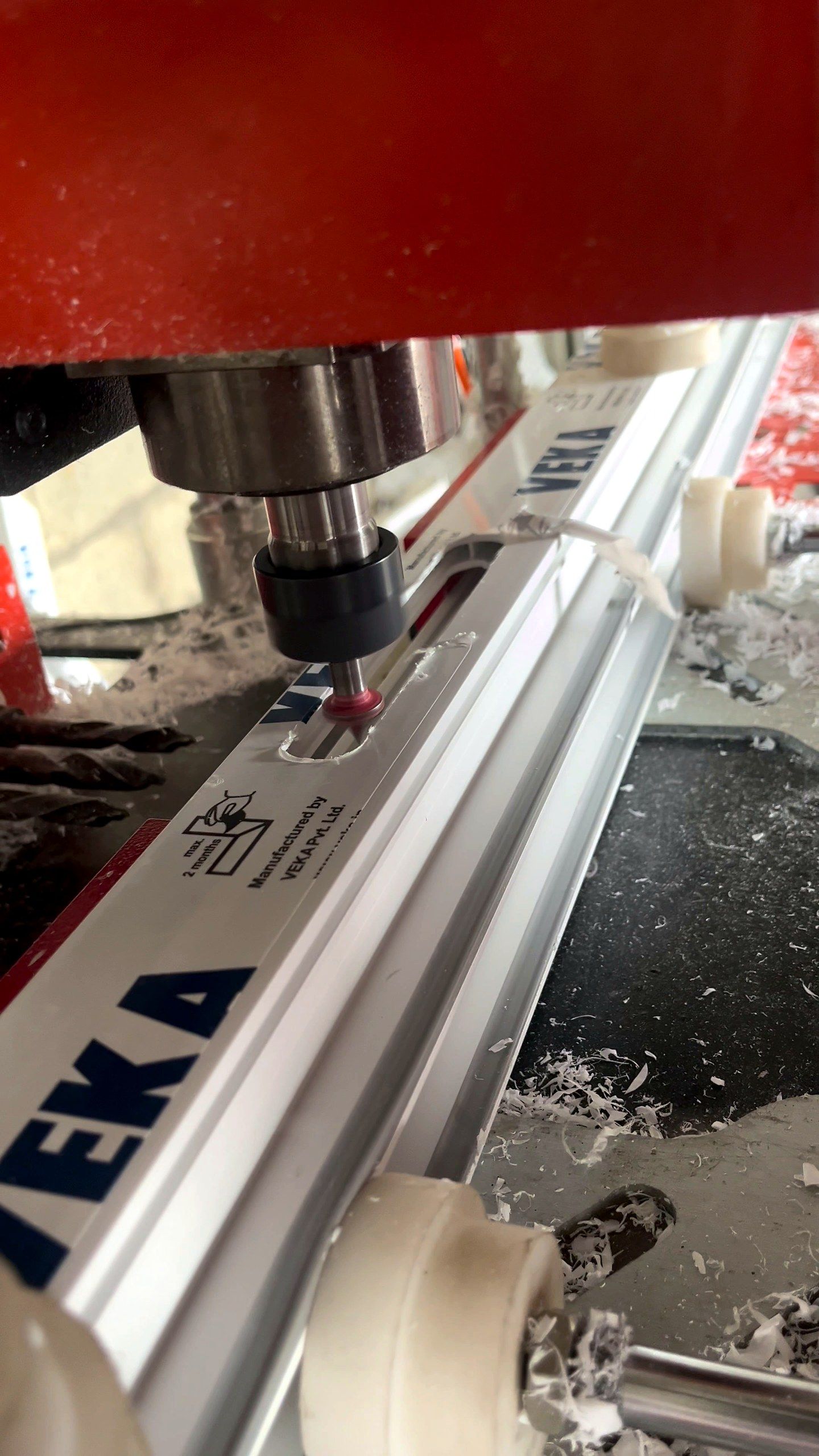
A CNC router cuts the drainage slots that let any water that gets past the outer seal run back out, and the openings for handles and locking hardware.
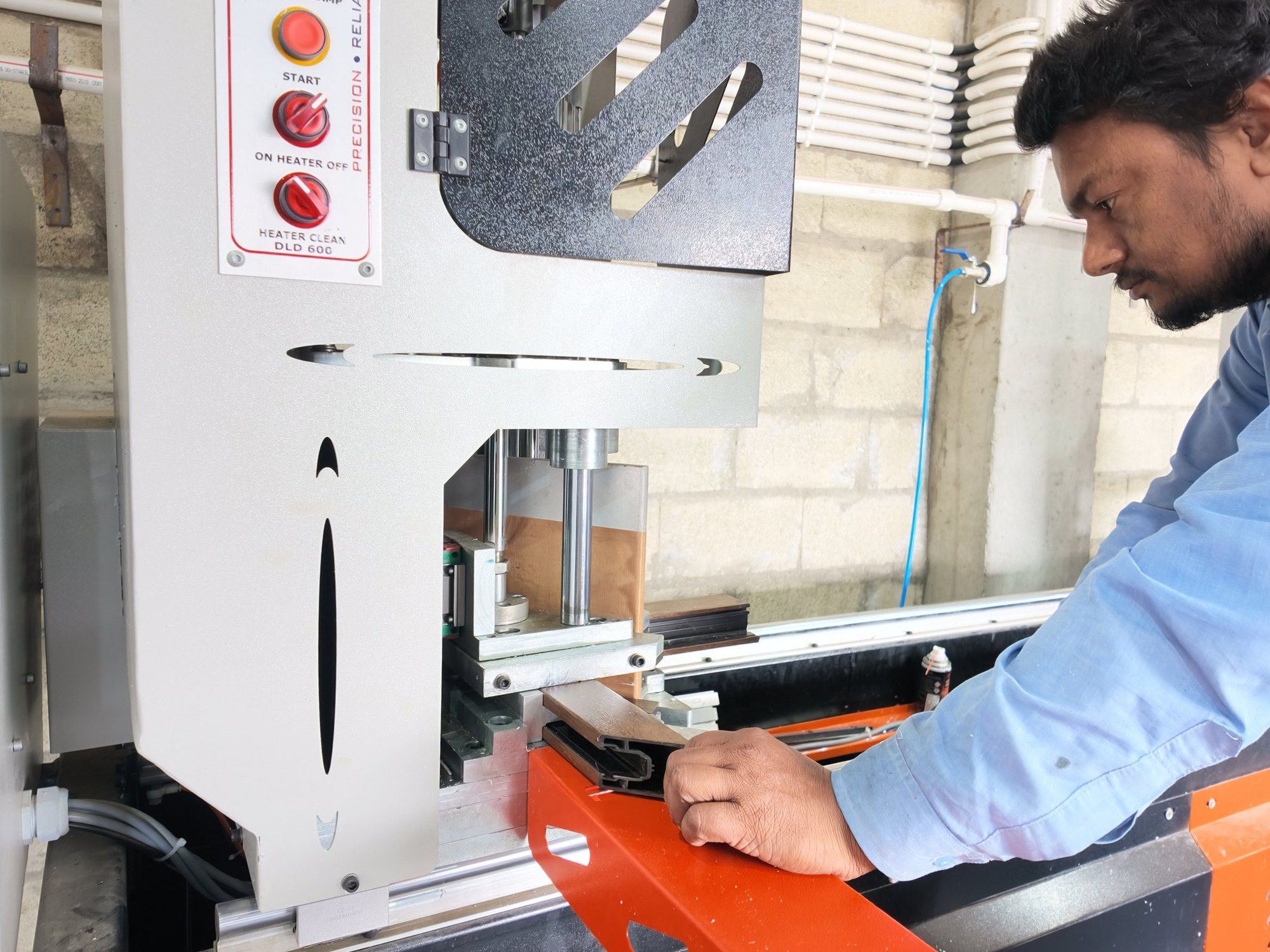
5. Welding the corners
The cut ends are heated and pressed together on a welding machine until they fuse. The result is a corner with no joint at all. A cleaning machine then trims the weld so the corner is crisp.
6. Gaskets, glass and hardware
EPDM gaskets go into their grooves, the glass unit is set on packers and held by a glazing bead, and the hardware is fitted: hinges, handle, locking points or rollers, matched to the size and weight of the sash.
7. Checked before it leaves
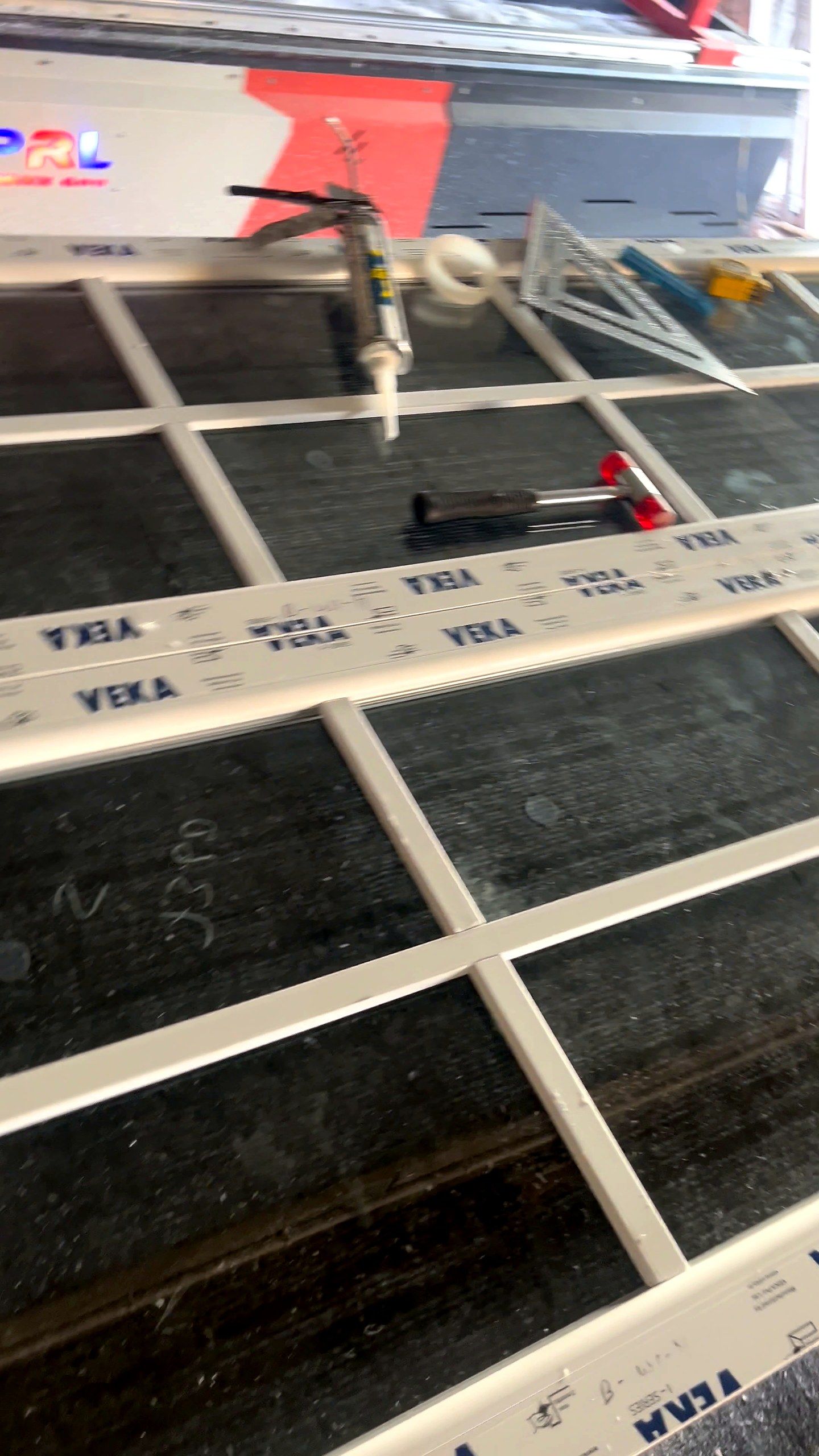
Every unit is checked for size, appearance, the seals, and that it opens, closes and locks properly. Then it is wrapped and labelled for its room.
8. Fitted and sealed
The last step happens at your house: the frame is set, packed, fixed and sealed to the wall. Read about it in replacing windows room by room.
More photos: inside the plant.
Questions people ask
Why is steel put inside uPVC windows?
To keep longer frames and sashes straight and stiff, so they keep closing evenly onto their seals for years. The steel sits inside the profile chambers, so you never see it.
What is a welded corner?
The ends of two profiles are heated and pressed together on a welding machine so they fuse into one piece. There is no screwed joint for air or water to get through.
Which profile system do you use?
We fabricate mainly on VEKA uPVC profile systems. The profile family for your job is written into the quotation.